


ISITUSA, from zero to one
ISITUSA came to us with an idea for a modern, trustworthy resource. We developed its name, identity, custom typeface and platform together, making it easier to explore invasive species and trace the information back to its sources.
Visit the live websiteInvasive Serif
Inspired by the formal character of botanical institutions, we drew a custom typeface with pronounced serifs and distinctive curves. It gives the organization a recognizable voice of its own.
ABCDEFGHIJKLMNOPQRSTUVWXYZ
The identity palette
Deep green connects the identity to the natural world. White keeps dense information readable, while black gives the type and fine detail a clear contrast.
An identity for the field, too
We carried the symbol, custom lettering and palette into field materials: a notebook for observations, a volunteer badge and a check-in sheet. The same identity works at a field event as it does in the research platform.
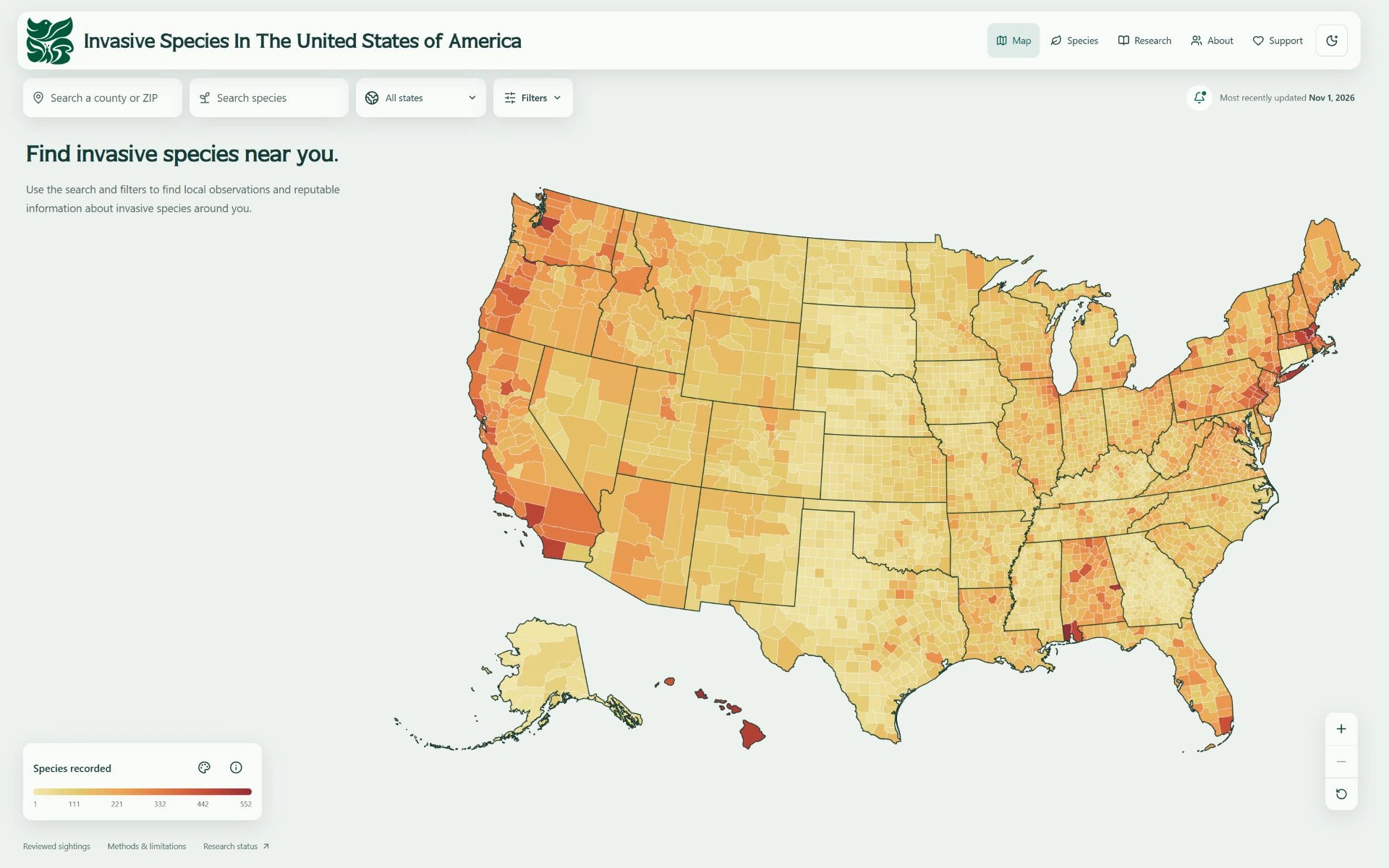
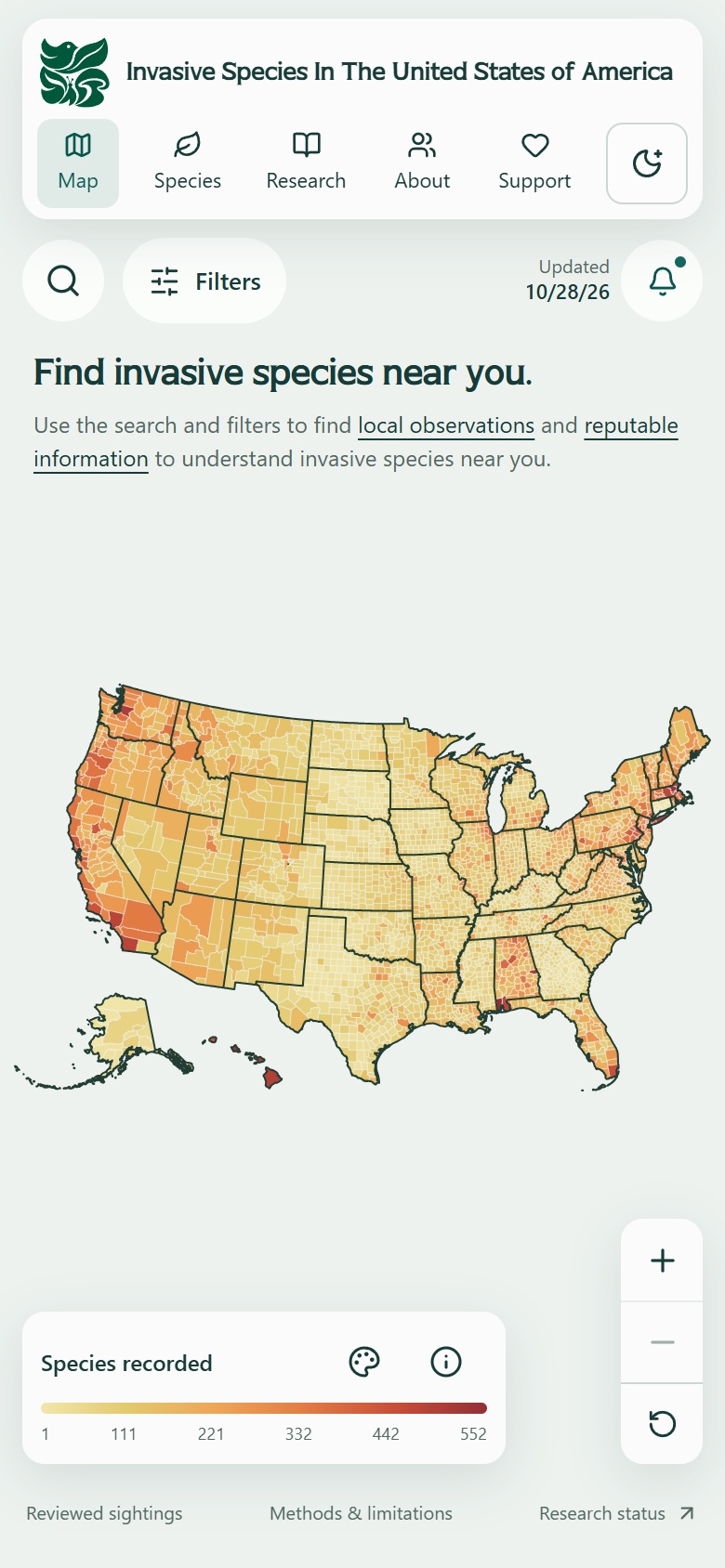
Find your county. See what’s there.
The map comes first. Visitors can move from the national picture to their own county, then explore the species and research behind it.
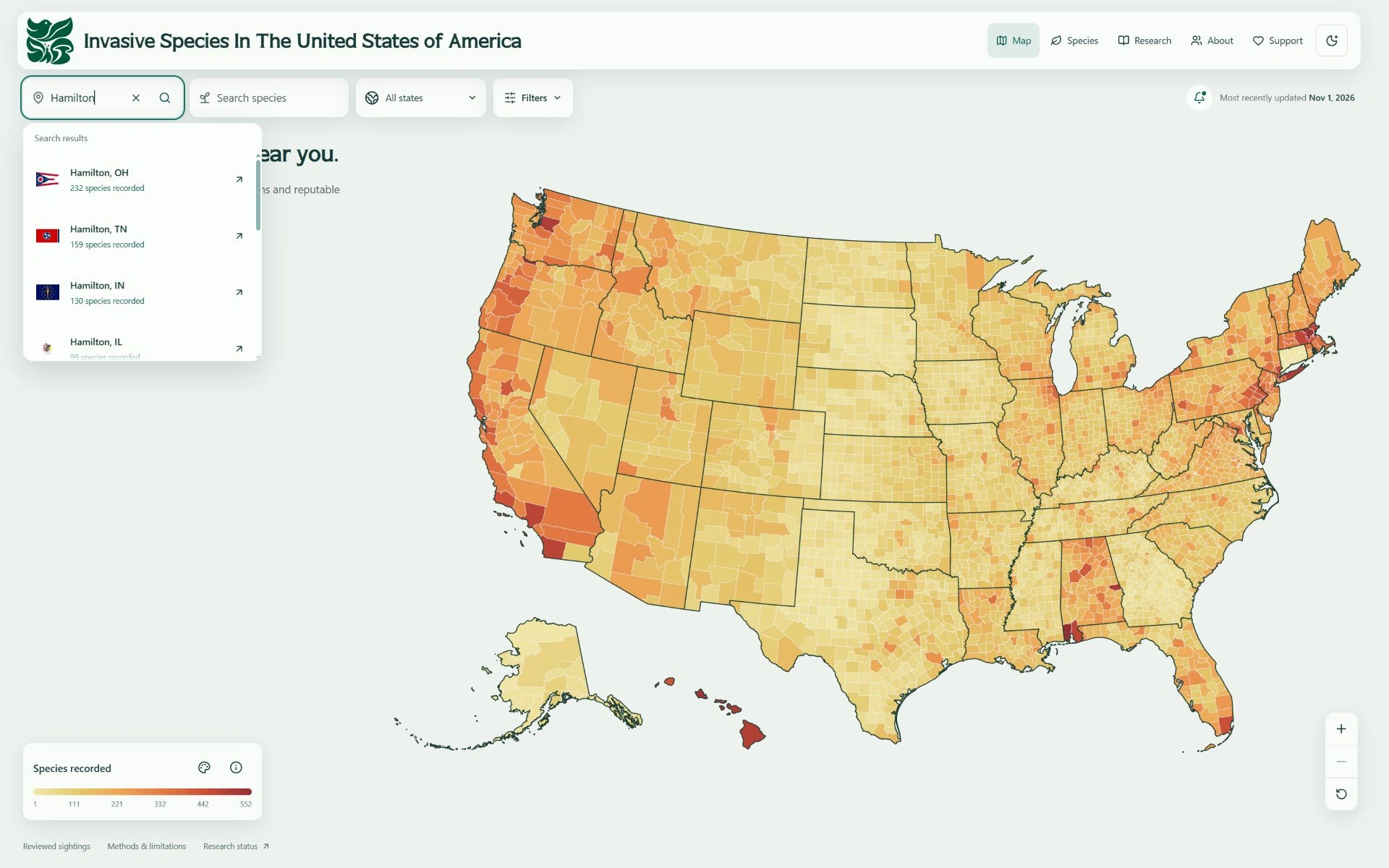
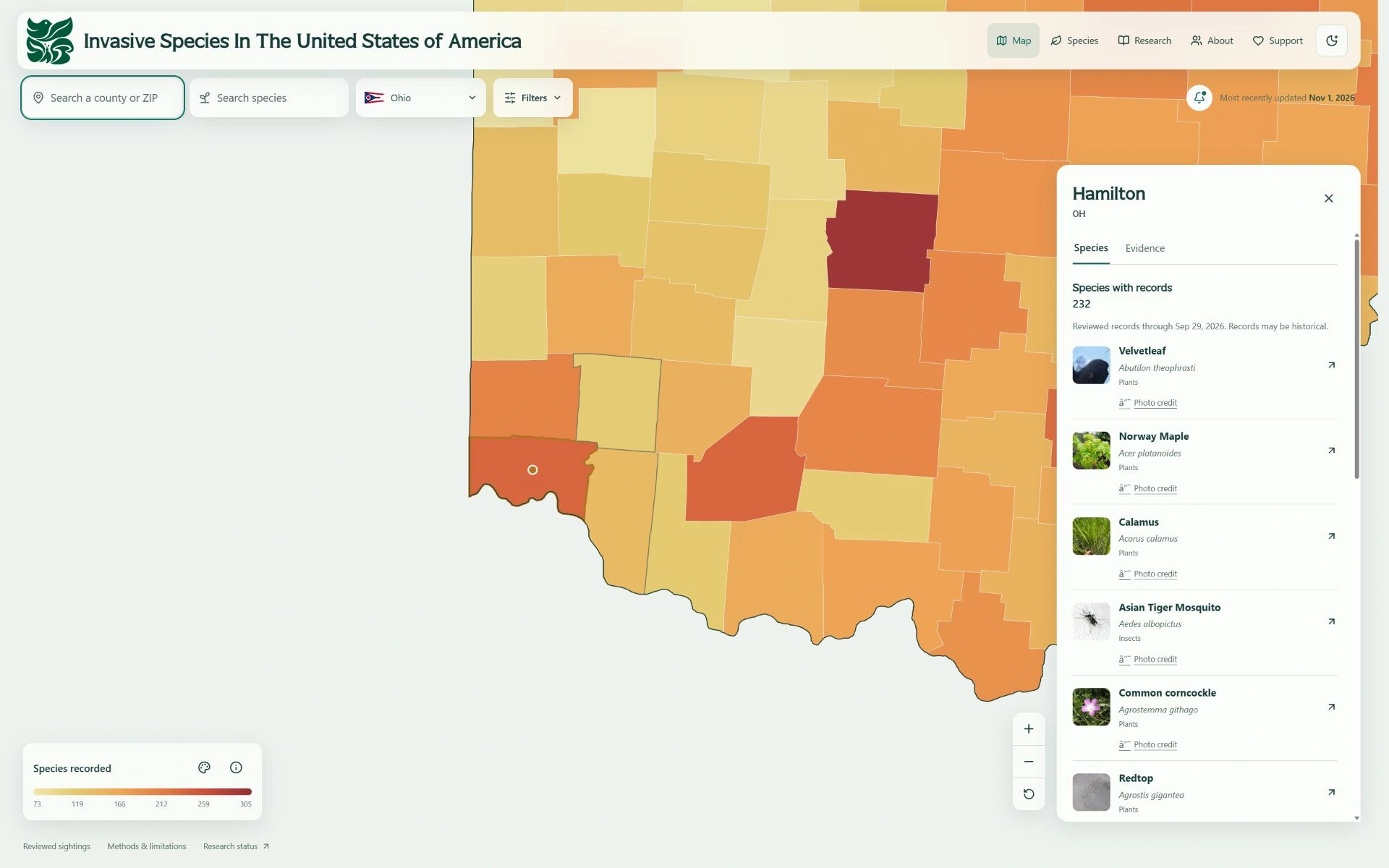
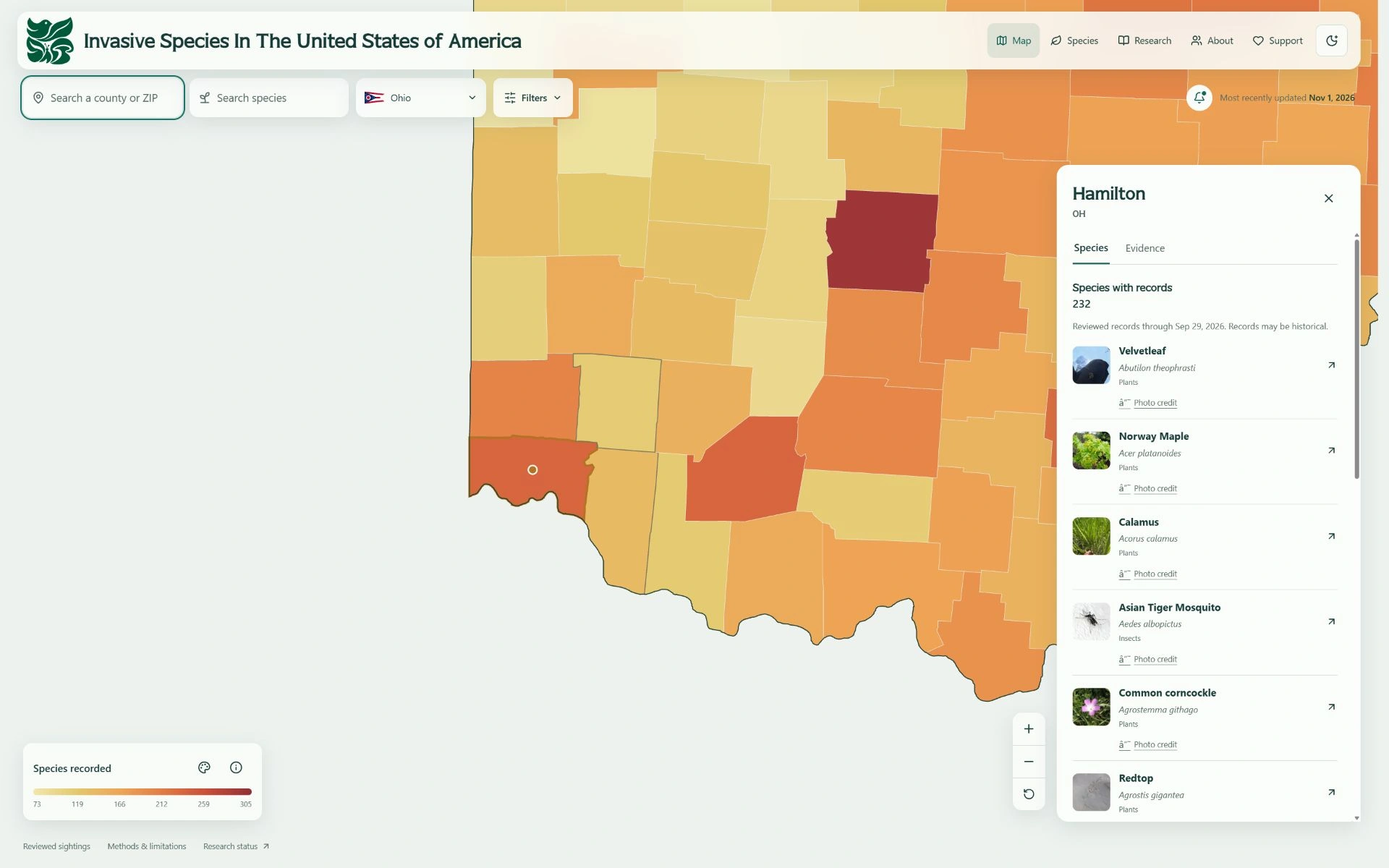
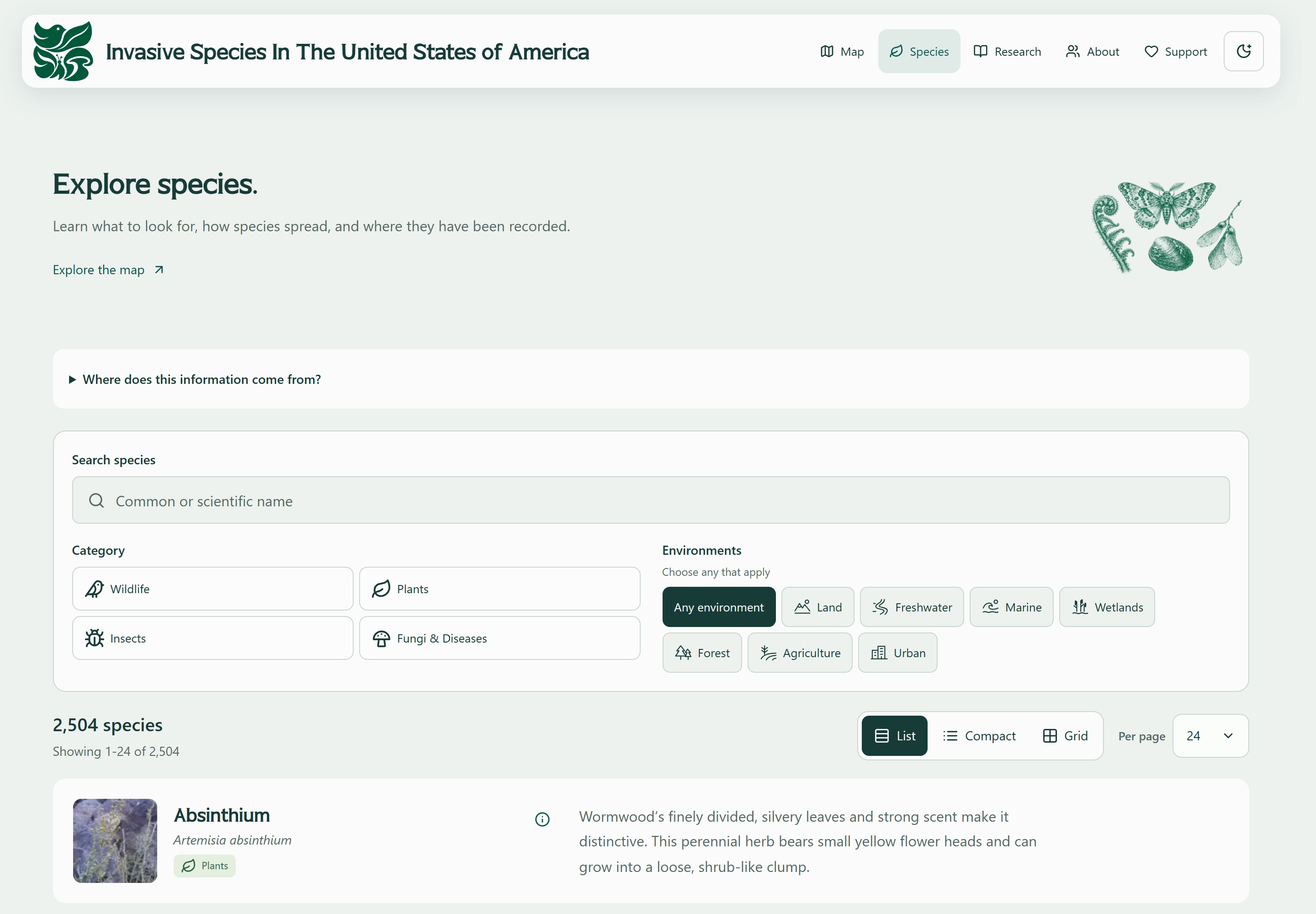
From a name to the records
Species filters offer another route into the same information.
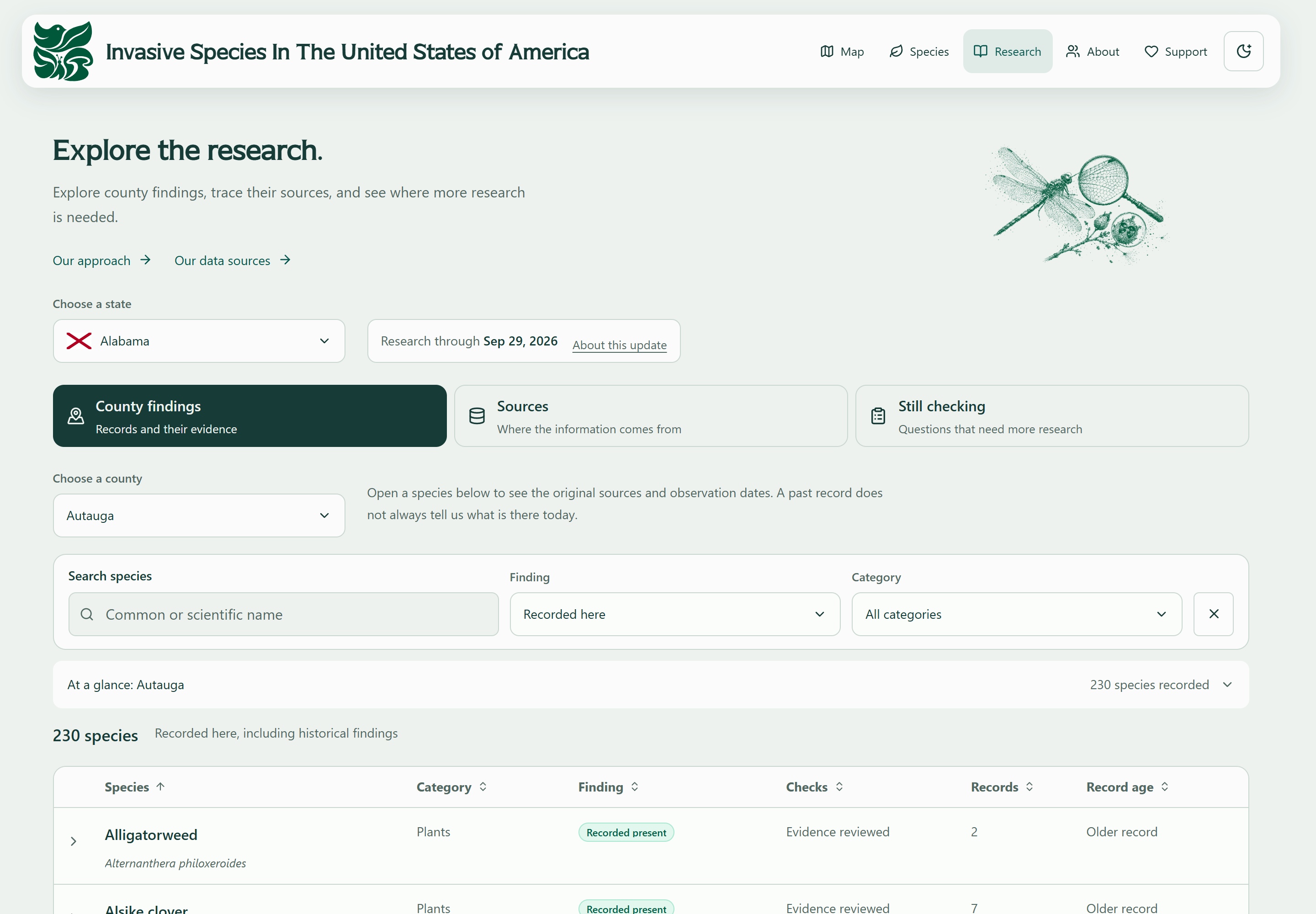
Keep the sources in reach
A searchable research library lets visitors follow a finding back to its supporting material.
One connected platform
We brought agency datasets, research papers and submitted sightings into one platform. Reviewed records feed the map, species directory and research library, so visitors can explore the same information in different ways.
Behind the public resource
The internal dashboard brings species reviews, submitted sightings and research records together. A finding can be checked against its source, linked to a species and location, then published to the public site.
Built for the people maintaining it
We also built volunteer coordination and publishing tools into the platform. The team can organize contributors, manage posts and keep the information current in one place.
The result
From an initial idea, we built the name, identity, custom typeface and the platform behind ISITUSA. The public map, species directory and research library share a system for gathering evidence, reviewing records and publishing information. Volunteer coordination and internal tools make that resource maintainable. The result is a complete foundation for the organization, from its first impression to the work happening behind it.